


Prostatitis in men has different symptoms, everything largely depends on the form of the disease.The inflammatory process in the tissues of the prostate gland occurs for several reasons.Viruses, bacteria and even chronic diseases such as tuberculosis and pyelonephritis can be to blame.
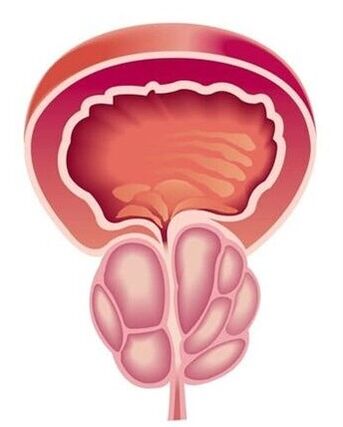
Some forms of the disease are rare, while others are diagnosed more often.There is also the so-called general symptomatology, but understanding the classification is not so easy.
What is prostatitis?
Prostatitis is an inflammatory disease that occurs for various reasons.The inflammatory process affects the tissue of the prostate gland, is characterized by unpleasant symptoms and can be a consequence of tuberculosis, alcoholism or obesity.
Types of prostatitis known to doctors:
- Acute bacterial - this type of disease is quite rare and is characterized by acute, pronounced symptoms.Requires hospital treatment under the supervision of a specialist;can cause sepsis or septic shock.
- Chronic bacterial - the disease often occurs without pronounced symptoms, but in some cases some signs of an acute type of prostatitis are observed.
- Chronic (not bacterial) - develops against the background of infectious diseases or occurs as a result of inflammatory processes occurring in the body for a long period of time.Doctors were unable to identify all the factors that led to the development of the inflammatory process.
- Asymptomatic (asymptomatic) - can appear as a concomitant disease, develops quickly, but there are no specific symptoms.The signs of the inflammatory process are weakly expressed.In some cases, the disease does not require treatment and disappears on its own after the root cause is removed.
- Chronic granulomatous - occurs against the background of replacement of prostate tissue with growths of fibrous tissue with granules inside.In this case, there may be foci of necrosis in the granules.The disease develops as a complication after surgery on the pelvic organs or as a consequence of an infectious process occurring in the tissues.
Detailed classification
Forms of prostatitis can also have a slightly different classification depending on the type of pathogen that led to the development of inflammation:
Bacterial type of disease.The causative agents are Escherichia coli and Pseudomonas aeruginosa, streptococci and staphylococci.Bacteria enter the prostate tissue via the lymphatic and blood routes.
- Gonorrheal type of disease.Pathogens: gonococci.Infection occurs through unprotected sexual contact.
- Viral type of disease.It occurs due to herpes virus, cytomegalovirus and human papilloma virus.The main danger of the disease is that the cells of the virus actively multiply and can infect the cells of nearby organs.
- Tuberculosis type of disease.The causative agents are Koch's bacilli.This type of infection is dangerous because it is difficult to treat and occurs as a concomitant disease during the active course of the main one - tuberculosis.
- Fungal type of disease.The causative agent is a fungus of the genus Candida.It develops while taking antibiotics or after unprotected sex with a woman who has thrush.
- Mixed type of disease.It appears as a result of infection with at least two of the above diseases.It is extremely rare.
A woman can infect a man with various bacteria.Infection occurs during the period of unprotected PA.In addition, the partner's pregnancy increases the risk of infection during this period;a woman, against the background of a weakened immune system, often develops thrush, and this, in turn, causes the development of fungal prostatitis.
Signs and symptoms of prostate inflammation in men
The first sign of prostatitis is the pain that appears during urination and has an increasing character, increasing with the compression of the ureter.
The main signs of prostatitis:
- problems in the intimate sphere;
- discharge from the urethra (in rare cases, it all depends on the type of disease);
- pain when urinating;
- frequent desire;
- increased body temperature, general signs of intoxication.
Symptoms of prostatitis in men are increasing.The swelling of the prostate tissue gradually increases.It increases in volume as it increases, the pain increases and the symptoms become more intense.
Signs of acute and chronic prostatitis
So, how does acute prostatitis manifest itself, description of symptoms:
- Increase in body temperature to 38 degrees and above.
- The appearance of discharge from the urethra.
- Increasing pain in the groin area.
- Frequent and painful urge to urinate.
- Erection problems.
Symptoms often appear spontaneously, they increase and may be accompanied by a worsening of the patient's general condition: decreased appetite, general weakness, malaise and apathy.
What signs are characteristic of the chronic type of disease:
- discomfort during erection;
- recurring pain in the groin, abdomen, testicles or even the perineum;
- difficulties during urination.
In the chronic form of the course, the signs of prostatitis in men are mild and appear periodically.They disturb the man from time to time.But under unfavorable conditions, symptoms intensify, problems with erection and urination arise.
Causes of prostate disease
The causes of prostatitis in men are varied;the inflammatory process in the tissues develops against the background of:
- non-compliance with personal hygiene rules;
- sexual contact with a woman who has an infectious disease;
- systematic hypothermia;
- chronic pyelonephritis or tuberculosis.
The causes of the disease are often associated with the presence of an infectious agent in the human body.In the absence of adequate therapy, a chronic inflammatory process gradually develops that affects nearby tissues.
The cause of prostatitis in young people can be constant stress, poor nutrition, lack of vitamins, prolonged abstinence, promiscuity, heavy physical activity, etc.
Despite the fact that the causes of prostatitis are different, according to urologists, there is a risk group that includes people:
- elderly people.
- With reduced immunity.
- Leading a sedentary lifestyle.
- Alcohol abusers.
Chronic diseases, systemic alcohol consumption, indiscriminate sexual contact - all this can cause the development of an inflammatory process.But if you regularly undergo examinations, visit a urologist and examine yourself, you may never encounter this disease.
Diagnosis of the disease
The diagnosis of prostatitis is carried out in several stages, including:
- collection of anamnesis (description of the symptoms that bother the patient);
- performing an ultrasound of the pelvic organs (prostate, kidneys and ureters);
- urinalysis (general, clinical, according to Nechiporenko, daily portion and bacterial culture);
- smear from the urethra for microflora;
- checking;
- blood test for ELISA;
- urography (performed if necessary, due to the toxicity of the method and the presence of contraindications).
The main diagnostic method is conducting a comprehensive examination to identify and eliminate the main cause of the disease.
Methods of treatment of prostatitis
Treatment of prostatitis in men begins with stopping the inflammatory process and reducing the intensity of unpleasant symptoms.It can be carried out in several stages and include:
- taking antibiotics;
- carrying out physiotherapy procedures;
- intake of diuretics, vitamins and immunomodulators.
How to treat prostatitis in men and most importantly how, the doctor should tell you.Because it all depends on the cause of the inflammation and the severity of the symptoms.
Tablets for prostatitis can be divided into several groups:
- anti-inflammatory drugs;
- antibacterial drugs;
- vitamins and immune system stimulants.
In any case, antibiotics are prescribed, but in order to prescribe such drugs to a patient, the doctor must be sure of the diagnosis.
Medicines are taken within 2-3 weeks.If necessary, the duration of therapy is increased.But if antibiotics do not have the desired effect on the patient's body, then the therapy is subject to correction.
Prostate massage is a method of increasing the effectiveness of the treatment.It is prescribed for congestion in the prostate gland and is used as an adjunct to the main therapy.
Massage is most effective in the period of exacerbation of the disease.It helps to "release" the prostate gland from the accumulated secretion, thereby removing pathogenic microorganisms through the urethra.This helps to enhance the effect of antibiotics and shorten the duration of treatment.
What physiotherapy procedures can be prescribed:
- laser treatment;
- warming up;
- ultrasonic phonophoresis;
- diadynamophoresis.
Why is prostatitis dangerous if left untreated?
Is prostatitis dangerous for men's health and what is the main danger of the disease?The thing is that the inflammation develops quickly, "invades" the tissue of the prostate gland, and if the disease is not treated, it can cause:
- chronic infertility;
- fibrous tissue changes;
- impotence (with a probability of up to 45%);
- chronic diseases of the kidneys and other nearby organs.
What is the danger of prostatitis with incorrectly selected therapy:
- Without treatment, the inflammatory process can become chronic.
- They lead to the development of prostate adenoma.
- Erection problems.
Over a long period of time, inflammation will cause intoxication, the signs of which will only worsen the patient's well-being and complicate the course of the disease.
Prevention of prostatitis at home
Prostatitis prevention comes down to simple rules:
- maintenance of personal hygiene;
- use of antiseptics after unprotected PA;
- rationalization of sex life;
- correction of the diet (it is worth including meat in the diet, it is rich in proteins).
Prevention of prostatitis in men may also include taking certain medications:
- vitamins and minerals;
- immunostimulants;
- herbal diuretics.
Preventive methods will help prevent the development of the inflammatory process, but you should not lose vigilance.
In order not to face prostatitis, it is worth treating colds and viral diseases.
Prostatitis is a dangerous disease that can cause serious complications.Therefore, if unpleasant symptoms appear, you should contact a urologist as soon as possible, this will avoid serious complications: impotence, infertility.